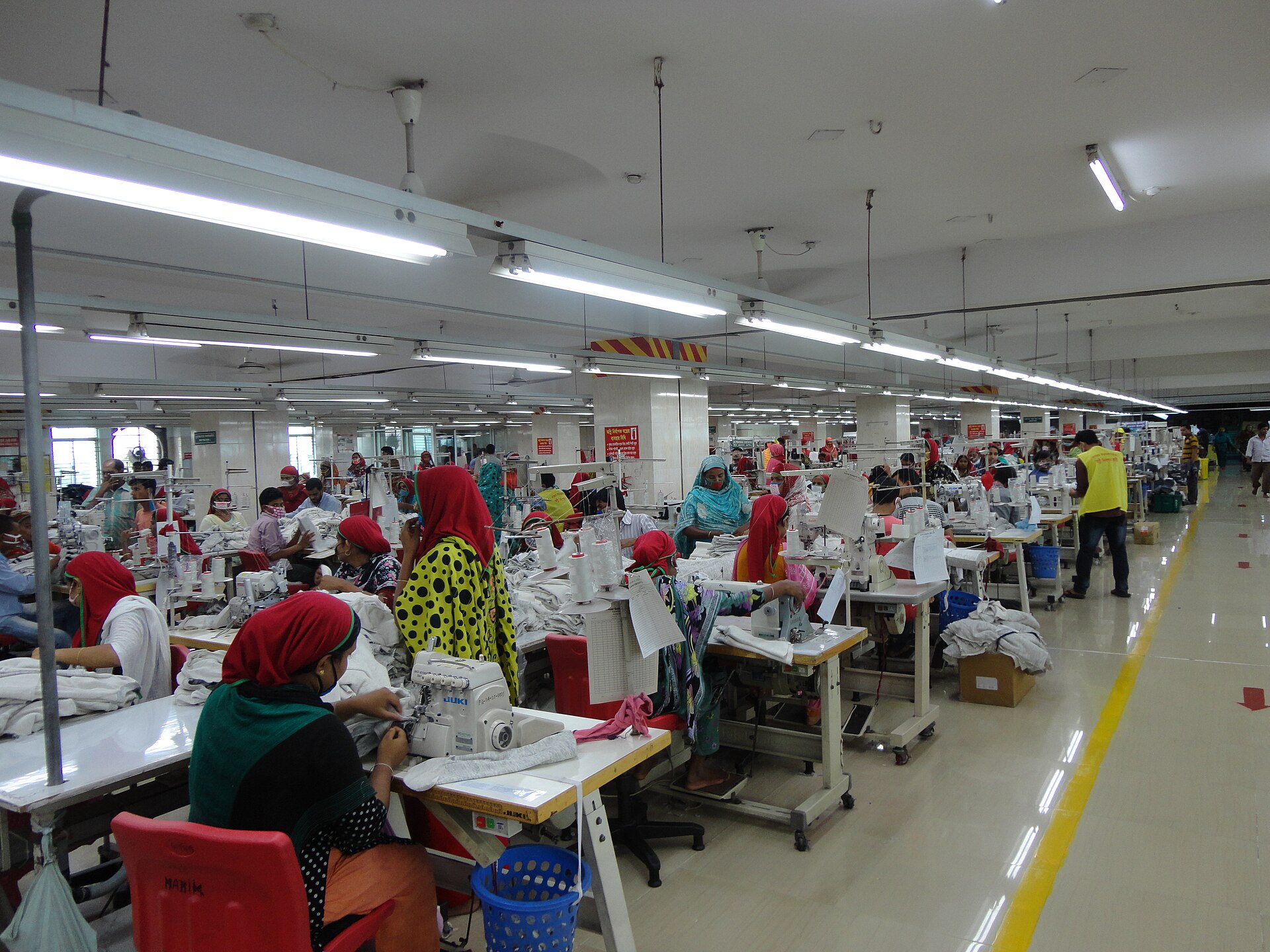
Updated November 2026. The people who sew the world’s clothes are among the lowest-paid manufacturing workers anywhere. This explainer compares legal minimum wages in major garment-producing countries with what it actually costs to live, and explains why the gap persists.
Minimum wage vs living wage
A minimum wage is the lowest pay a country’s law allows. A living wage is what a worker needs, in a standard working week without overtime, to afford a decent standard of living for themselves and their family: food, housing, healthcare, education, clothing, transport and a small amount for emergencies. In most garment-producing countries, the legal minimum is well below a living wage.
Garment worker wages by country
| Country | Monthly garment minimum wage (approx.) | Notes |
|---|---|---|
| Bangladesh | 12,500 taka (about US$101) | Set in late 2023. A new wage structure is due from December 1, 2026 after mass protests. |
| Cambodia | US$210 | Set annually for the garment and footwear sector. |
| Vietnam | US$140–210 | Varies by region. |
| China (Guangdong) | US$286–378 | Varies by city within the province. |
Figures are as reported in November 2026 and converted at recent exchange rates; they change with each wage review and currency movement.
Bangladesh: the 2026 wage fight
Bangladesh has around 4 million garment workers, about half of them women. Its minimum wage was raised from 8,000 to 12,500 taka in 2023, which unions said was still far too low. Since then, inflation averaging around 9% has eroded what that pay buys. In November 2026, tens of thousands of workers protested, demanding 30,000 taka a month. Many workers report earning around 13,000 to 15,000 taka with overtime and cutting back on food and healthcare. The government formed a six-member wage board including owner and worker representatives, and both sides agreed a new wage structure will take effect from December 1, 2026, with the size of the increase still to be decided.
Why wages stay low
- Price pressure: brands negotiate hard on price, and factories compete internationally for orders.
- Fear of losing orders: governments worry that raising wages will push brands to cheaper countries.
- Weak bargaining power: union organising is often restricted.
- Labour is a small share of the price: the wages of the person who sewed a garment are usually a tiny fraction of its retail price, so the cost to brands of paying more is relatively small, but the pressure to cut it still flows down the chain.
What would help
- Brands committing to pay prices that cover a living wage, and ring-fencing labour costs in negotiations.
- Binding agreements with unions, and freedom for workers to organise.
- Transparency: publishing supplier lists and wage data.
- Shoppers buying fewer, better-made clothes and asking brands about living wages.
For the wider picture, read our guide to working conditions in the global garment industry.
Sources
- Al Jazeera, “‘Going hungry’: Garment workers in Bangladesh say wages barely cover needs” (3 November 2026).
- Al Jazeera, “Bangladesh forms wage board as garment workers protest” (1 November 2026).
- Reuters, “Behind Bangladesh’s garment boom, workers cut food, healthcare as wages fall short” (November 2026).
- Dawn / AFP, “BD garment workers reject 56pc pay rise” (8 November 2023).
Leave a Reply