Updated November 2026. Some links are affiliate links: as an Amazon Associate we earn from qualifying purchases.
Clothes that still smell after washing are one of the most common laundry complaints. Gym kit that smells of sweat the moment you warm up, towels with a sour or musty whiff, a jumper that picked up smoke or cooking smells: these odours usually come from bacteria, body oils and detergent residue trapped in the fibres, or from damp laundry left too long before drying. Masking them with more fragrance rarely works for long.
The good news is that most smells can be removed with simple, low-cost methods: a vinegar or baking soda soak, an enzyme booster for sweat and body odour, the right wash temperature and, above all, drying clothes quickly and completely. This guide walks through each method, explains which odour needs which fix, and recommends a few products worth having. We have not lab-tested these products; our picks are based on how they work and on buyer reviews.
Quick picks: odour removers for laundry
- Best for sweat and body odour: Enzyme Laundry Booster Odor Remover, an unscented enzyme powder added alongside your usual detergent.
- Best oxygen-based booster: OxiClean Odour Blasters, an oxygen stain and odour powder for soaking or adding to the wash.
- Best fragrance-free pods: Nature Clean Stink Bombs, zinc-based pods made without dyes, enzymes, chlorine or phosphates, according to the brand.
- Best budget basic: Arm and Hammer Pure Baking Soda, for pre-soaks and adding to the wash.
Why clothes keep smelling after washing
Before reaching for products, it helps to know where the smell comes from:
- Bacteria and body oils. Sweat itself has little smell. Odour comes when skin bacteria break down sweat and sebum. Synthetic sportswear holds onto these oils, which is why polyester gym tops are often the worst offenders.
- Mildew. Laundry left damp in the machine, a basket or a gym bag can grow mould and mildew within hours, giving that sour, musty smell.
- Detergent and softener build-up. Using too much detergent, or fabric softener on towels and sportswear, leaves residue that traps odour-causing bacteria.
- A smelly washing machine. Seals, drawers and drums can harbour mould and residue that transfer smells back onto clothes. See our guide to washing machine cleaners.
- Absorbed odours. Smoke, cooking smells and mothballs cling to natural fibres such as wool and cotton.
Method 1: Vinegar soak
White vinegar helps break down residue and neutralise many odours. Mix about one cup of white vinegar with a basin of warm or hot water (as hot as the care label allows), submerge the clothes and soak for an hour or overnight for stubborn smells. Rinse thoroughly, then wash as normal. Appliance maker Whirlpool recommends soaking with vinegar before washing rather than pouring it straight into the washer, so check your machine’s manual before adding vinegar to the drum.
Don’t use vinegar in the same load as chlorine bleach, and don’t soak silk, acetate or rayon in vinegar without testing first.
Method 2: Baking soda soak or wash booster
Baking soda (sodium bicarbonate) is mildly alkaline and absorbs and neutralises acidic odours such as sweat. Two simple ways to use it:
- Pre-soak: dissolve about one cup of baking soda in four cups of hot water, then dilute in a basin and soak smelly items for a few hours before washing.
- In the wash: add about half a cup of baking soda to the drum along with your usual detergent.
A large bag of plain baking soda is one of the cheapest and most versatile things you can keep in the laundry room.
Method 3: Enzyme booster for sweat and body odour
For gym clothes, work shirts and anything with lingering body odour, an enzyme booster is often the missing step. Enzymes such as protease and lipase break down the proteins and oils that bacteria feed on, so the smell is removed rather than covered up. Add an enzyme booster like this unscented enzyme laundry powder to a pre-soak or the main wash, following the dose on the pack.
Avoid enzyme products on wool, cashmere and silk, because these are protein fibres too. Use a gentle wool wash instead.
Method 4: Oxygen bleach soak
Oxygen bleach releases hydrogen peroxide in water, which helps break down stains and kill odour-causing bacteria on washable, colourfast fabrics. OxiClean Odour Blasters is an oxygen powder designed for both stains and odours. Dissolve it in warm water, soak for one to six hours, then wash. It works particularly well on musty towels and white sports socks. Read more in our oxygen bleach guide.
Method 5: Fresh air and sunlight
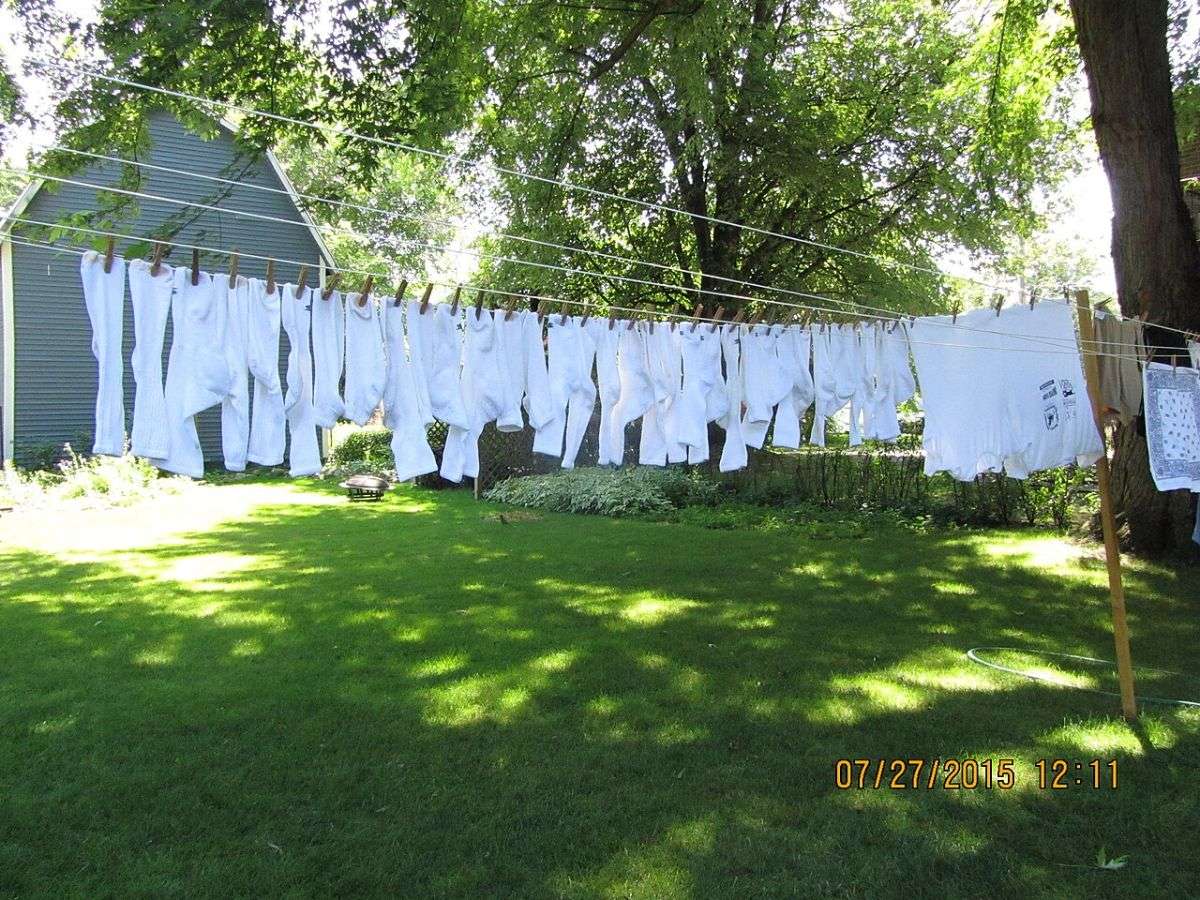
Never underestimate a washing line. Drying clothes outdoors in a breeze helps air out smoke and cooking smells, and sunlight has a mild bleaching and freshening effect on whites. For clothes that just smell stale rather than dirty, such as a coat or wool jumper, a few hours hanging outside can be enough without a wash at all. If you dry indoors, use a drying rack in a ventilated room so clothes dry quickly.
Which fix for which smell?
| Smell | Likely cause | Best fix |
|---|---|---|
| Sweat and body odour | Bacteria and body oils, especially in synthetics | Enzyme booster or baking soda soak, then wash as hot as the label allows |
| Musty or mildew | Clothes left damp | Vinegar or oxygen bleach soak, rewash, dry immediately |
| Smoke | Absorbed particles | Air outdoors, then baking soda soak and wash |
| Sour towels | Detergent and softener build-up | Skip softener, vinegar soak, wash hot with less detergent |
| Mothballs | Naphthalene or paradichlorobenzene vapour | Air outdoors for a day or two, then wash |
How to get smells out of specific items
Gym clothes and sportswear
Wash them as soon as possible after a workout, or at least hang them up to dry rather than leaving them balled up in a bag. Turn them inside out, pre-soak in an enzyme booster or baking soda, and avoid fabric softener, which coats technical fabrics and traps odours. Zinc-based treatments such as Nature Clean Stink Bombs are another option for hockey gear and workwear that are hard to keep fresh.
Towels
Musty towels usually mean residue plus slow drying. Wash with less detergent and no softener, add a vinegar soak if needed, and make sure towels are completely dry before folding. Wool dryer balls can speed up machine drying; see do wool dryer balls work?
Wool and delicates
Air them outside first. If they still smell, hand wash in cool water with a gentle wool wash and dry flat. Avoid enzymes, oxygen bleach and hot water. Our guide on how to wash a wool sweater has the full method.
Vintage and second-hand clothes
Charity shop finds often smell of storage. Air them out, then soak washable items in a baking soda or vinegar solution before washing. For dry-clean-only pieces, airing and steaming are the safest home options.
Habits that prevent odours
- Use the right amount of detergent. More is not better; excess leaves residue.
- Don’t overload the machine, so water and detergent can circulate.
- Move laundry to dry as soon as the cycle ends.
- Leave the washer door and detergent drawer open between washes, and clean the seal regularly.
- Let sweaty clothes dry before they go into the hamper.
- Store clothes clean and fully dry.
Frequently asked questions
Why do my clothes smell after washing?
Usually because of body oils and bacteria the wash didn’t remove, detergent or softener residue, a dirty washing machine, or clothes that stayed damp too long before drying.
Does vinegar get the smell out of clothes?
Yes, a vinegar soak helps with musty and residue-related smells. Soak, rinse thoroughly and then wash, rather than pouring vinegar straight into the machine unless your manual allows it.
Can I mix baking soda and vinegar in the wash?
They neutralise each other, so mixing them in the same step wastes both. Use them in separate soaks or separate washes.
How do I get mildew smell out of clothes?
Rewash as soon as possible with a vinegar or oxygen bleach soak, then dry the items quickly and completely. If the smell keeps coming back, clean your washing machine.
Will hot water remove odours?
Warmer water removes more body oils and kills more bacteria, but always follow the care label. Wool, silk and many synthetics need cool washes, so rely on soaks and enzyme or oxygen boosters for those instead.
Related guides
- How to remove red wine from clothes
- Best laundry stain removers
- Best washing machine cleaners
- Best non-toxic laundry detergent
- How to wash clothes sustainably
Sources
- Whirlpool: How to get tough odors out of clothes
- Product details from manufacturers’ listings on Amazon.ca, November 2026
Leave a Reply